A) (CH3CH2) 2CHC≡CCH(CH2CH3) 2
B) (CH3CH2) 2CHC≡CCH3
C) CH3CH2CH2C≡CCH3
D) CH3CH2CH2CH2C≡CCH3
E) CH3CH2C≡CCH2CH2CH3
G) B) and D)
Correct Answer

verified
Correct Answer
verified
A) xylene
B) phenol
C) acetone
D) toluene
E) aniline
G) A) and C)
Correct Answer
verified
Correct Answer
verified
A) stability of the double bond.
B) lack of rotation of the double bond.
C) strength of the double bond.
D) short length of the double bond.
E) vibration of the double bond.
G) All of the above
Correct Answer
verified
Correct Answer
verified
A) diethylene
B) 1,1-butadiene
C) 1,2-butadiene
D) 1,3-butadiene
E) 1,4-butadiene
G) C) and D)
Correct Answer
verified
Correct Answer
verified
A) another name for 1,2-dichlorobenzene
B) the common name for 1,2-dimethlybenzene
C) another name for 1,3-dichlorobenzene
D) the common name for aminobenzene
E) the common name for hydroxybenzene
F) the term used when a benzene ring is a side chain or substituent group;abbreviated as C6H5-
G) another name for 1,4-dichlorobenzene
H) a term describing a hydrocarbon in which additional C-H bonds can be formed
I) a simple molecule that can be joined with many others to form a large molecule
J) a concept used to describe a molecular structure as an average of two or more similar structures
K) a term describing a hydrocarbon which has the maximum number of C-H bonds possible
L) refers to a class of compounds containing a specific 6-membered ring structure with delocalized electrons
M) a large molecule made from many smaller molecules,often of only one or two kinds
O) E) and J)
Correct Answer
verified
Correct Answer
verified
A) 
B) 
C) 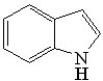
D) None of these are aromatic.
E) All of these are aromatic.
G) D) and E)
Correct Answer
verified
Correct Answer
verified
A) bromination.
B) chlorination.
C) hydration.
D) hydrogenation.
E) oxidation.
G) A) and C)
Correct Answer
verified
Correct Answer
verified
A) solubility in non-polar solvents.
B) insolubility in water.
C) flammability.
D) nonpolarity.
E) lack of toxicity.
G) A) and C)
Correct Answer
verified
Correct Answer
verified
A) 2-methyl-3-methyl-2-hexene
B) dimethylhexene
C) 2,3-dimethyl-2-hexene
D) octene
E) 1,1,2-trimethyl-1-pentene
G) A) and D)
Correct Answer
verified
Correct Answer
verified
A) C2H6;C3H8
B) C2H4;C2H6
C) C2H2;C2H6
D) C2H4;C3H6
E) C2H4;C2H2
G) D) and E)
Correct Answer
verified
Correct Answer
verified
A) 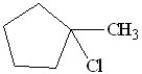
B) 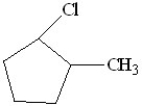
C) 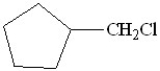
D) 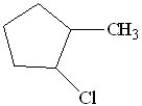
F) All of the above
Correct Answer
verified
Correct Answer
verified
A) another name for 1,2-dichlorobenzene
B) the common name for 1,2-dimethlybenzene
C) another name for 1,3-dichlorobenzene
D) the common name for aminobenzene
E) the common name for hydroxybenzene
F) the term used when a benzene ring is a side chain or substituent group;abbreviated as C6H5-
G) another name for 1,4-dichlorobenzene
H) a term describing a hydrocarbon in which additional C-H bonds can be formed
I) a simple molecule that can be joined with many others to form a large molecule
J) a concept used to describe a molecular structure as an average of two or more similar structures
K) a term describing a hydrocarbon which has the maximum number of C-H bonds possible
L) refers to a class of compounds containing a specific 6-membered ring structure with delocalized electrons
M) a large molecule made from many smaller molecules,often of only one or two kinds
O) K) and L)
Correct Answer
verified
Correct Answer
verified
A) another name for 1,2-dichlorobenzene
B) the common name for 1,2-dimethlybenzene
C) another name for 1,3-dichlorobenzene
D) the common name for aminobenzene
E) the common name for hydroxybenzene
F) the term used when a benzene ring is a side chain or substituent group;abbreviated as C6H5-
G) another name for 1,4-dichlorobenzene
H) a term describing a hydrocarbon in which additional C-H bonds can be formed
I) a simple molecule that can be joined with many others to form a large molecule
J) a concept used to describe a molecular structure as an average of two or more similar structures
K) a term describing a hydrocarbon which has the maximum number of C-H bonds possible
L) refers to a class of compounds containing a specific 6-membered ring structure with delocalized electrons
M) a large molecule made from many smaller molecules,often of only one or two kinds
O) F) and L)
Correct Answer
verified
Correct Answer
verified
A) a branched alkane has a halogen added to two adjacent carbon atoms.
B) an alkene is hydrated according to Markovnikov's Rule.
C) the carbons in an alkene double bond each have two different substituent groups.
D) the carbons in the para position of an aromatic have the same substituent groups.
E) hydrogen is added to both of the carbon atoms in a double bond.
G) A) and E)
Correct Answer
verified
Correct Answer
verified
A) 1,1-dichloropentane
B) 1,2-dichloropentane
C) 2,2-dichloropentane
D) 2,3-dichloropentane
F) All of the above
Correct Answer
verified
Correct Answer
verified
Correct Answer
verified
In a benzene ring,the six carbon atoms a...View Answer
Correct Answer
verified
View Answer
A) 
B) 
C) 
D) 
F) A) and C)
Correct Answer
verified
Correct Answer
verified
A) carbocations.
B) carbanions.
C) carbon atoms with 10 electrons.
D) carbon atoms with four electrons.
E) carbon atoms which have lost all their electrons.
G) A) and B)
Correct Answer
verified
Correct Answer
verified
A) distorted tetrahedral.
B) linear.
C) perpendicular.
D) tetrahedral.
E) trigonal planar.
G) A) and C)
Correct Answer
verified
Correct Answer
verified
A) cis-3-chloro-2-pentene.
B) trans-3-chloro-2-pentene.
C) cis-3-chloro-3-pentene.
D) trans-3-chloro-3-pentene.
E) monochloro-2-cis-pentene.
G) C) and D)
Correct Answer
verified
Correct Answer
verified
Showing 61 - 80 of 87
Related Exams